Lawyers of man convicted of Stephen Carroll murder refer PSNI surveillance to miscarriage of justice body
Connla Young · 21 October 2025
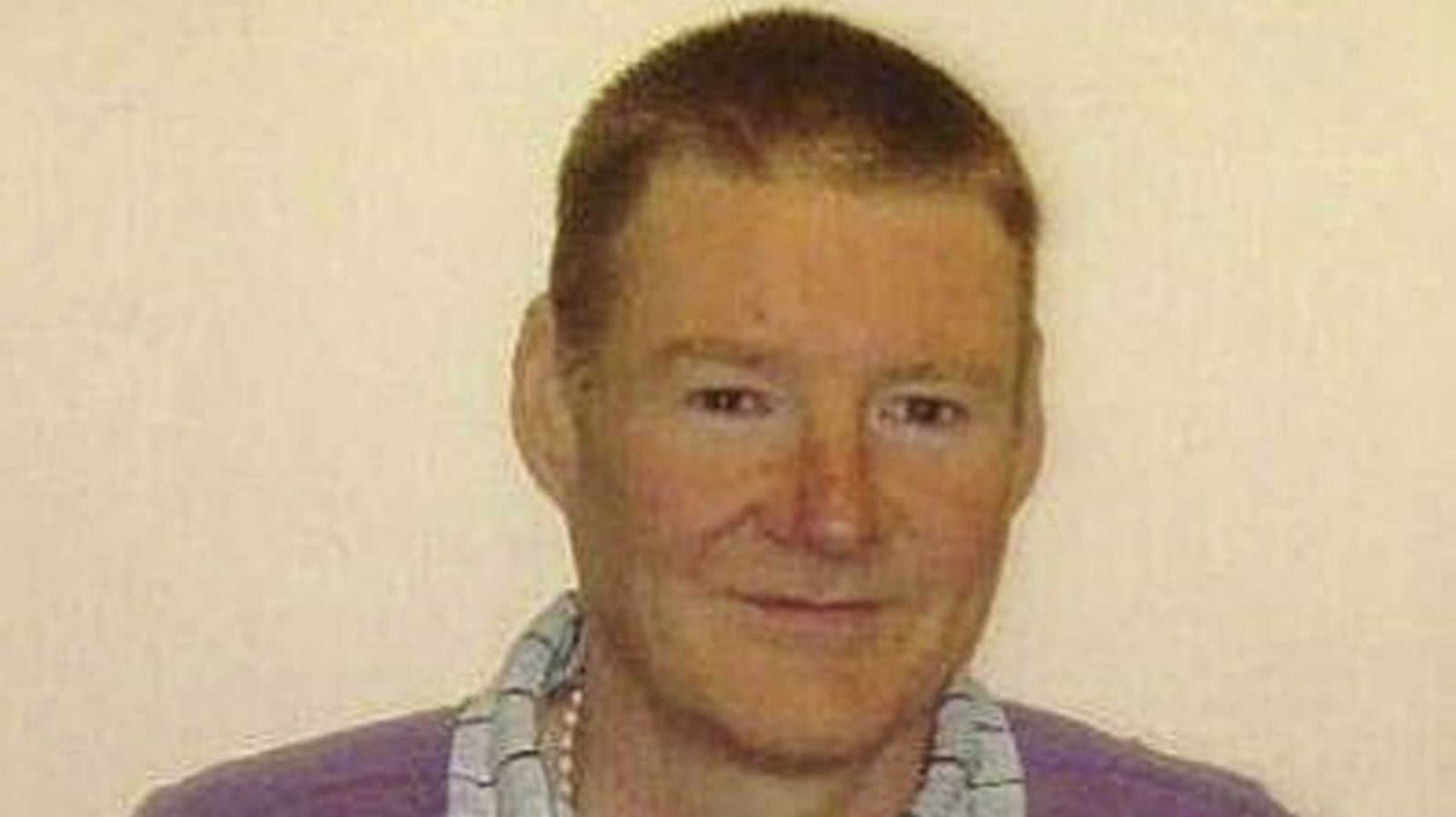
“I have sympathy for her suffering” Brendan McConville says of the widow of the man he is convicted of murdering
Lawyers for a man convicted of the murder of a police officer have contacted a body that investigates miscarriages of justice after it was confirmed the PSNI was spying on them.
Brendan McConville and John Paul Wootton were convicted in 2012 of killing police officer Stephen Carroll in Craigavon in March 2009.
The 48-year-old was shot dead by a Continuity IRA sniper as he answered a 999 call.
The Co Armagh men denied involvement and have been the focus of a long-running miscarriage of justice campaign.
McConville, who is currently serving a 25-year sentence in Maghaberry Prison, said that while he intends to press on with the campaign to clear his name, he is mindful of Stephen Carroll’s widow, Kate Carroll.
“I have sympathy for her suffering,” he told the Irish News.
“I think it is in her interests as well as mine that the truth is told.
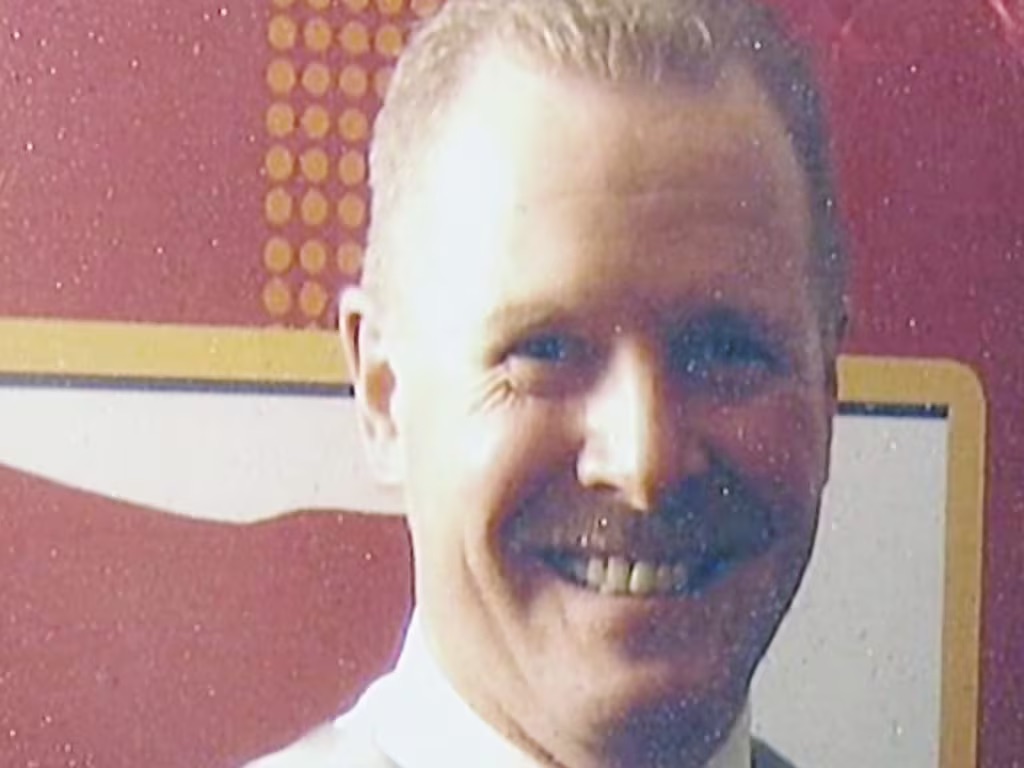
PSNI officer Stephen Carroll was murdered by the CIRA
“I empathise with her, it must be a terrible thing to lose someone in that way.”
It emerged last month that two members of McConville’s legal team were placed under PSNI surveillance in the run-up to an appeal in 2013, which ultimately failed to overturn their convictions.
Details of the police intrusion were confirmed to Peter Corrigan and his colleague Darragh Mackin by Angus McCullough KC.
The London-based barrister was appointed last year to carry out a review into PSNI surveillance of journalists, lawyers and others, by chief constable Jon Boutcher.
Mr McCullough has told both solicitors, who are partners in Phoenix Law, authorisation was given to obtain their communications data in 2013.
It was already known that both men were spied on by police while meeting a witness more than a decade ago.
In his report Mr McCullough sets out concerns about the consideration of ‘legally professional privilege’ (LPP) in relation to communication data authorisations.
The matter has now been referred by the solicitors to the Criminal Case Review Commission (CCRC), which examines potential miscarriages of justice.
In 2021, the CCRC rejected an application by McConville’s legal team to refer the case to the Court of Appeal.
Suspected British agent Dennis McFadden
A year later, the commission re-opened McConville’s case under threat of legal action over concerns about the role of suspected British agent Dennis McFadden.
In 2020, McFadden was exposed as a suspected MI5 agent after the spy agency led a sting that targeted the New IRA.
Codenamed Operation Arbacia, it resulted in the arrest of ten people.
McFadden is believed to have infiltrated the ‘Justice for the Craigavon Two’ campaign group, which included Gerry Conlon.
Mr Conlon was wrongfully convicted over the IRA’s 1975 Guilford pub bombings, which claimed the lives of five people, before being released from prison in 1989.
The committee, which included members of McConville’s immediate family, was regularly provided with legal briefings in the run up to a 2013 appeal.
McConville, who has now spent more than 16 years behind bars, said he was not shocked to learn his lawyers were under state surveillance.
“I was not surprised to find out that they were monitoring my legal team,” he told the Irish News.
“What I was surprised about was that they have been exposed and that this appeared in the McCullough report.
“I always suspected they were monitoring my legal team, I have been saying it for years.
“I’m just surprised it has now been confirmed.”
At the original trial, evidence was heard from a man known as Witness M, who claimed to have seen McConville in the area where Constable Carroll was shot.
Witness M was later placed in police protection outside the north.
At the subsequent appeal, his father became a key defence witness.
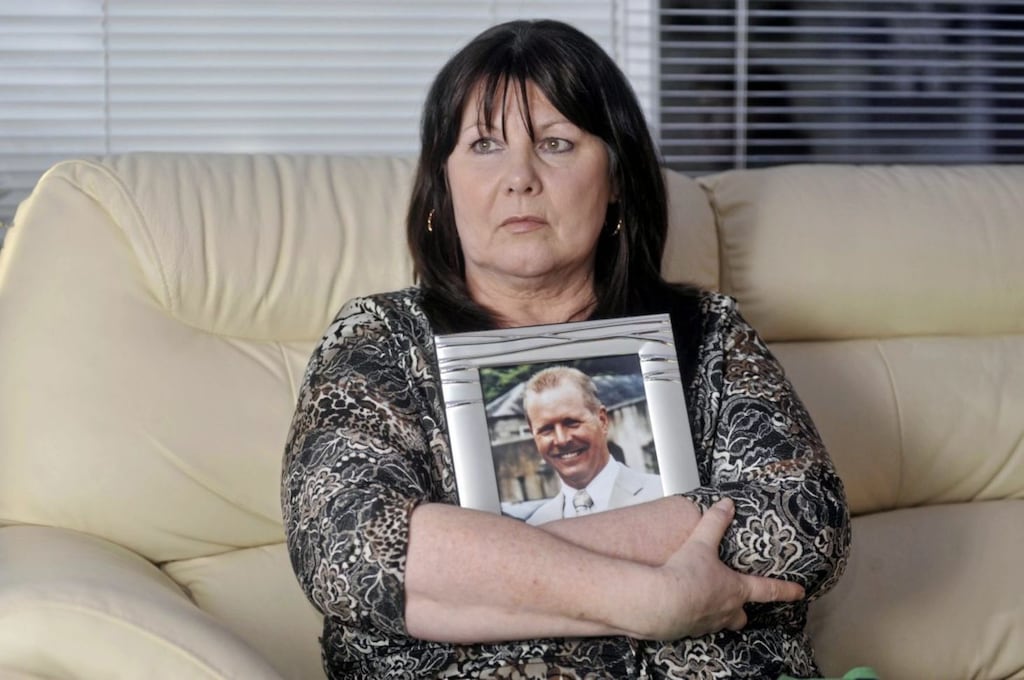
Kate Carroll holds a picture of her murdered husband Stephen Carroll in 2010. Picture by Colm Lenaghan/Pacemaker
Given the cipher, Witness Z, he later testified to the Court of Appeal that his son was a compulsive liar and Walter Mitty-type character, who could not have been in the area.
In the run-up to the appeal, Witness Z was also arrested by the PSNI on suspicion of withholding information before being released without charge.
During a court hearing, a senior PSNI officer said he believed the witness was “under immense pressure from persons who would not have the interests of justice at heart” and that he had been confronted by armed men.
The PSNI officer denied that the witness was questioned in a bid to “nobble” him and sabotage attempts to have the murder convictions overturned.
Witness Z told the court he was never coerced, threatened or forced to make an affidavit that undermined his son’s credibility.
It emerged during the appeal that a house frequented by Witness Z had been bugged.
In addition, a bar where he met Mr Corrigan and Mr Mackin, who were accompanied by Mr Conlon, was also placed under covert surveillance.
McConville believes state agencies have taken a particular interest in the Stephen Carroll case.
“MI5 has shown a lot of interest in this case,” he said.
“You have to ask, why?
“Why have they taken so much interest in this case, over and above the interest they have taken in relation to other similar matters.
“That needs to be strongly considered by anyone looking at this.”
He believes his legal privilege was compromised through the actions of state agencies.
“Surveillance was carried out on my legal team,” he said.
“The PSNI chief constable has apologised to my legal team for this.
“It was in fact my legal privilege that was breached, but I personally have had no former acknowledgement of that, or apology, from anyone.”
McConville believes authorities would have been aware of the potential wrong doing more than a decade ago.
“They knew this more than ten years ago, they knew this had happened, yet they told no-one, and I have been left sitting in jail while all the time they knew my legal privilege had been compromised.”
He believes the role played by Dennis McFadden underlines his claims around legal privilege.
“Again, my legal privilege was breached in that regard,” he claimed.
“Dennis McFadden was attending campaign meetings at which legal updates were being provided.
“He was working for MI5.
“He was bringing that information back to MI5.
“A meeting between my legal team and Witness Z was monitored.
“Was information about that meeting provided by Dennis McFadden?
And he added: “If you think of it this way, it’s like Manchester United V Liverpool, and then Liverpool plants one of their players in the Man United team.
“The state literally had a player lining out for my team.”
In 2011 the Prisoner Ombudsman found that a note found in McConville’s Maghaberry Prison cell two years earlier, which included personal details of the then governor, was hidden by a member of staff opposed to planned reforms at the prison on the balance of probabilities.
Pauline McCabe also concluded that prison staff leaked false information to the media that the governor was being targeted by dissident republicans.
Wootton, who was aged just 17 when he was arrested, was handed a 14-year-sentence.
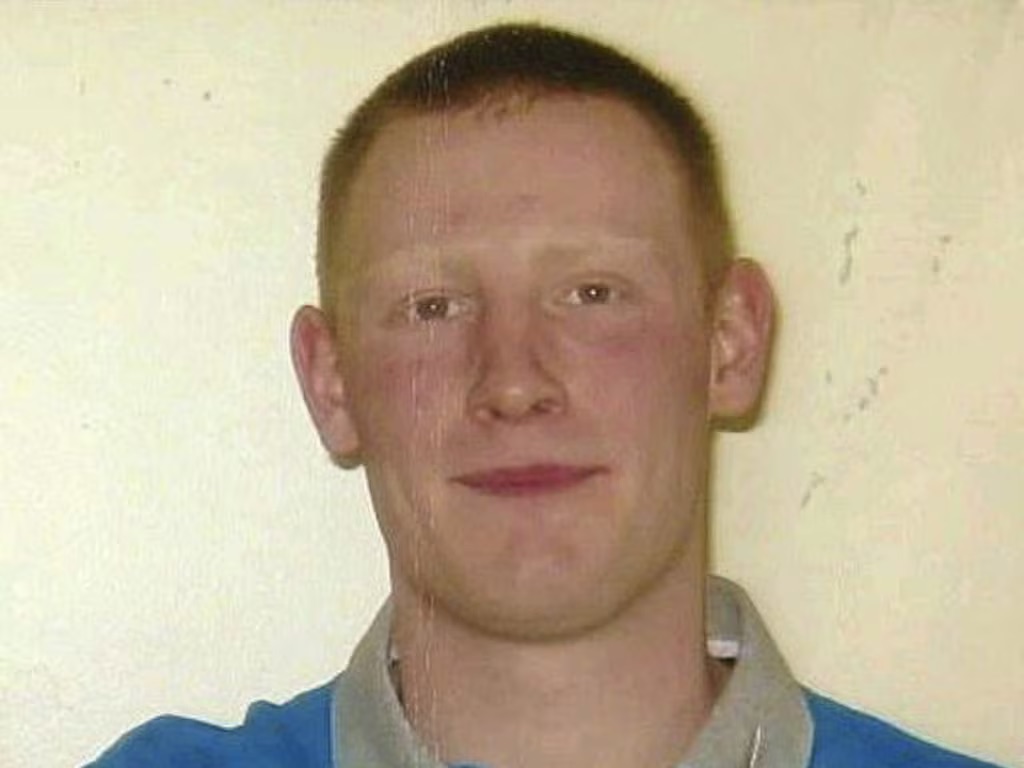
John Paul Wootton
This was subsequently increased to 18 years after then Director of Public Prosecutions Barra McGrory told the Court of Appeal both men’s jail terms were unduly lenient.
McConville, whose father and brother have died since he was jailed, said “you have to look at some of the things that have happened since I was arrested.
“A tracking device was wiped.
“A planted note was found in my cell, they wanted to introduce that as bad character evidence in my trial.
“Dennis McFadden, an MI5 agent, attended legal briefings provided by my lawyers ahead of my appeal – a breach of my legal privilege.
“A meeting between my solicitor and a potentially important witness, Witness Z, was under surveillance, the meeting was recorded and monitored.
“A house used by Witness Z, the father of Witness M, who he described as a Walter Mitty, was bugged ahead of my appeal.
“Witness Z was arrested and questioned by the PSNI - a person who may have undermined the state’s case was arrested.
“Now, every one of us should ask the question, ‘why has the state gone to such lengths in this case’?”
The life-sentence prisoner said that even when his 25-year sentence has been served, he will go before a parole board where he may be expected to admit involvement in the shooting of Mr Carroll to secure his release from jail.
“I will never admit to doing something I didn’t do,” he said.
“I can see why some people do, to get a reduced sentence or for early release.
“I won’t be doing that, I will not be admitting to something I am not guilty of.”
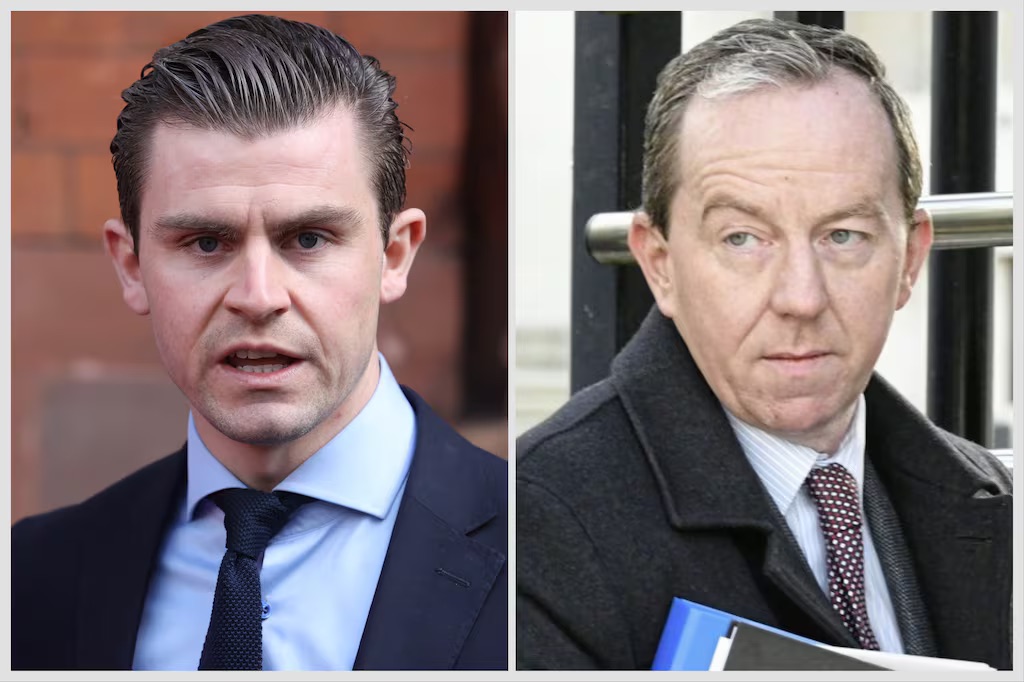
Solicitors Darragh Mackin and Peter Corrigan
Solicitor Darragh Mackin believes there has been a wrongful conviction.
“I do not mix my words when I say that this case remains one of the greatest miscarriages of justice this jurisdiction has ever seen,” he said.
“In 2020, it became clear that MI5 were monitoring and intercepting legal communications in this case.
“In 2025, we now know that the PSNI were equally deploying techniques to obtain legally professionally privileged materials.”
Mr Mackin urged the CCRC to intervene.
“When two agencies of the state seek to deploy surveillance techniques to get an advantage, the CCRC must step in, and send this case back for redetermination,” he said.
“If this is not a breach of the basic principles of a fair trial, then what is?”
The CCRC was contacted.
Originally published by The Irish News on 21 October 2025